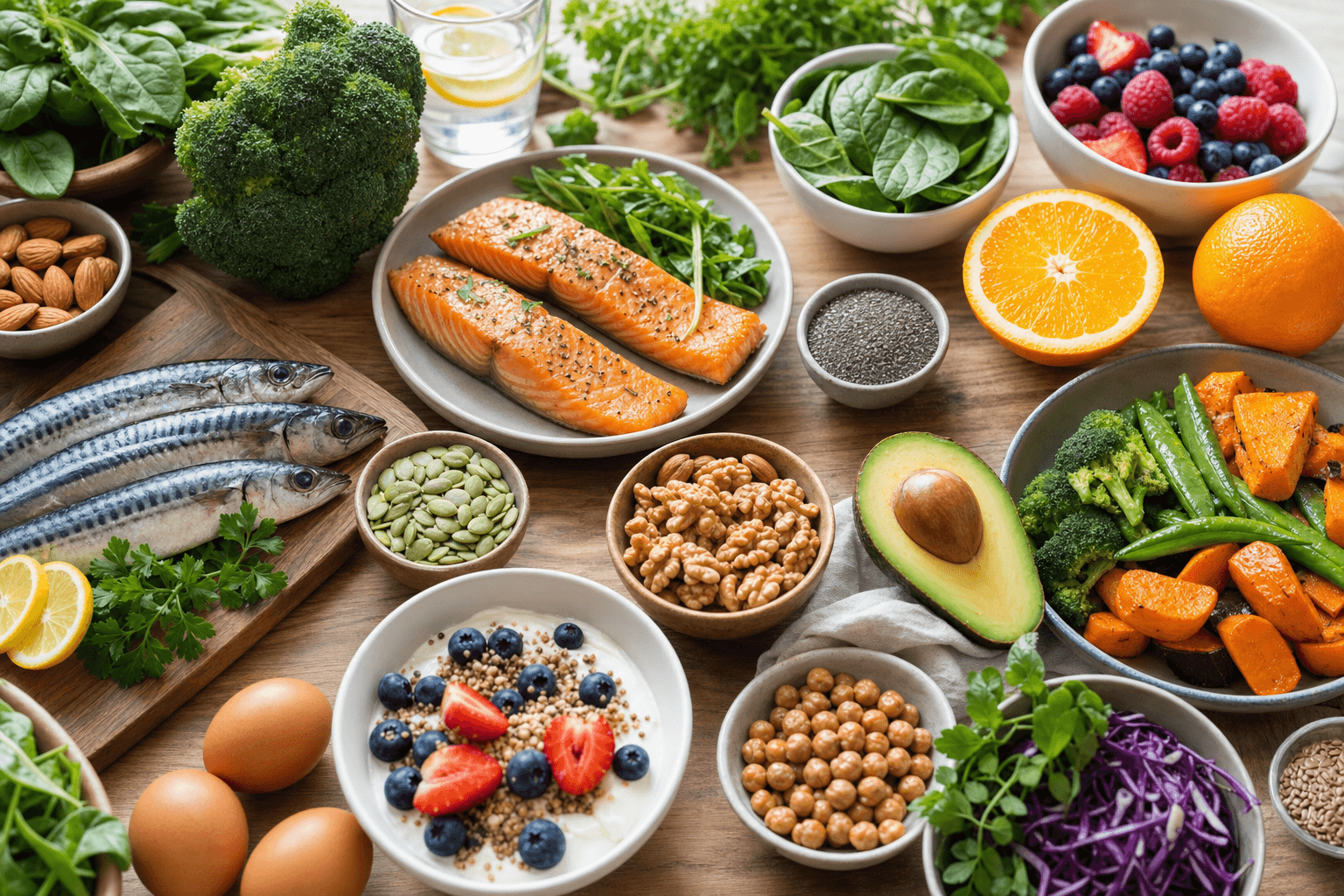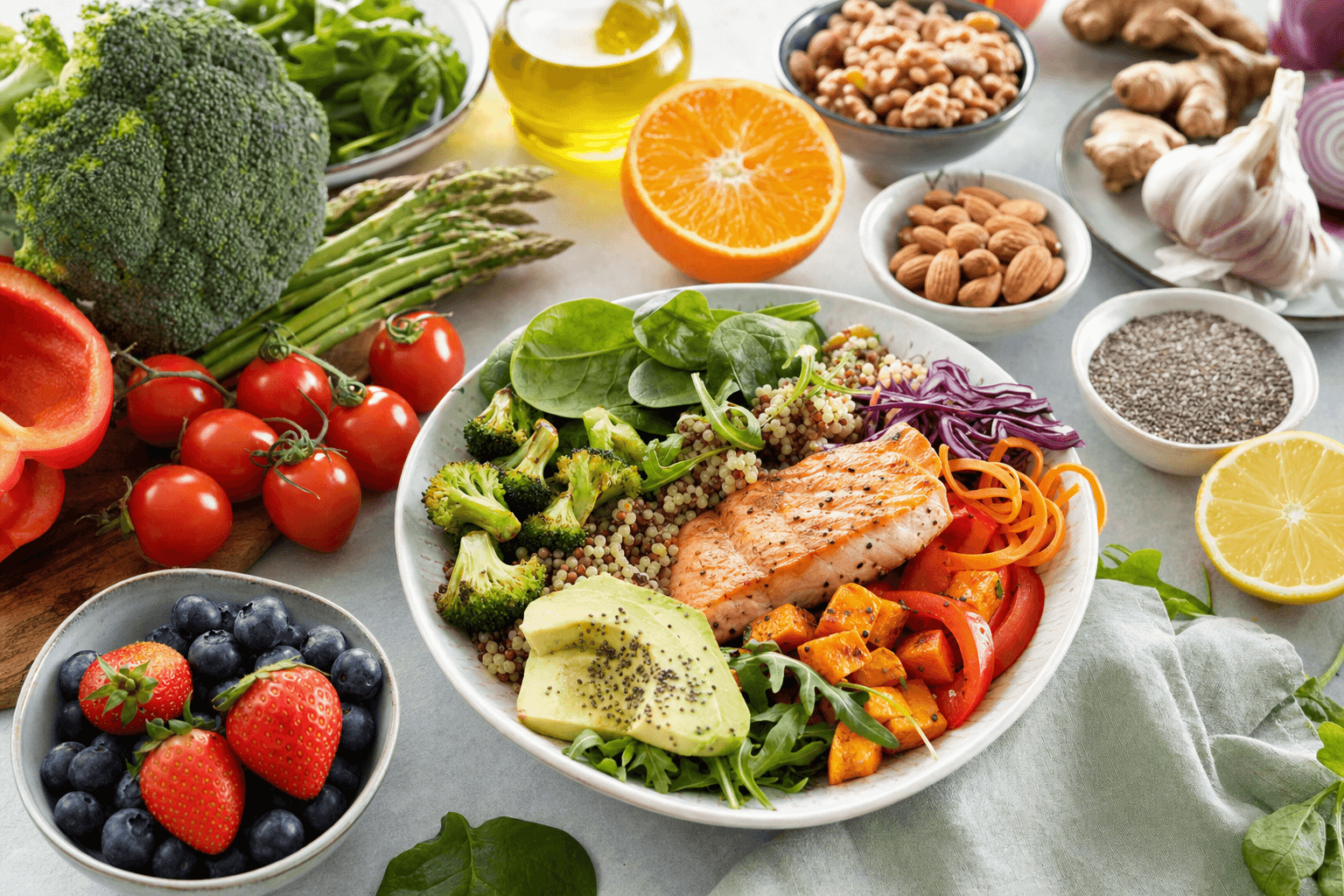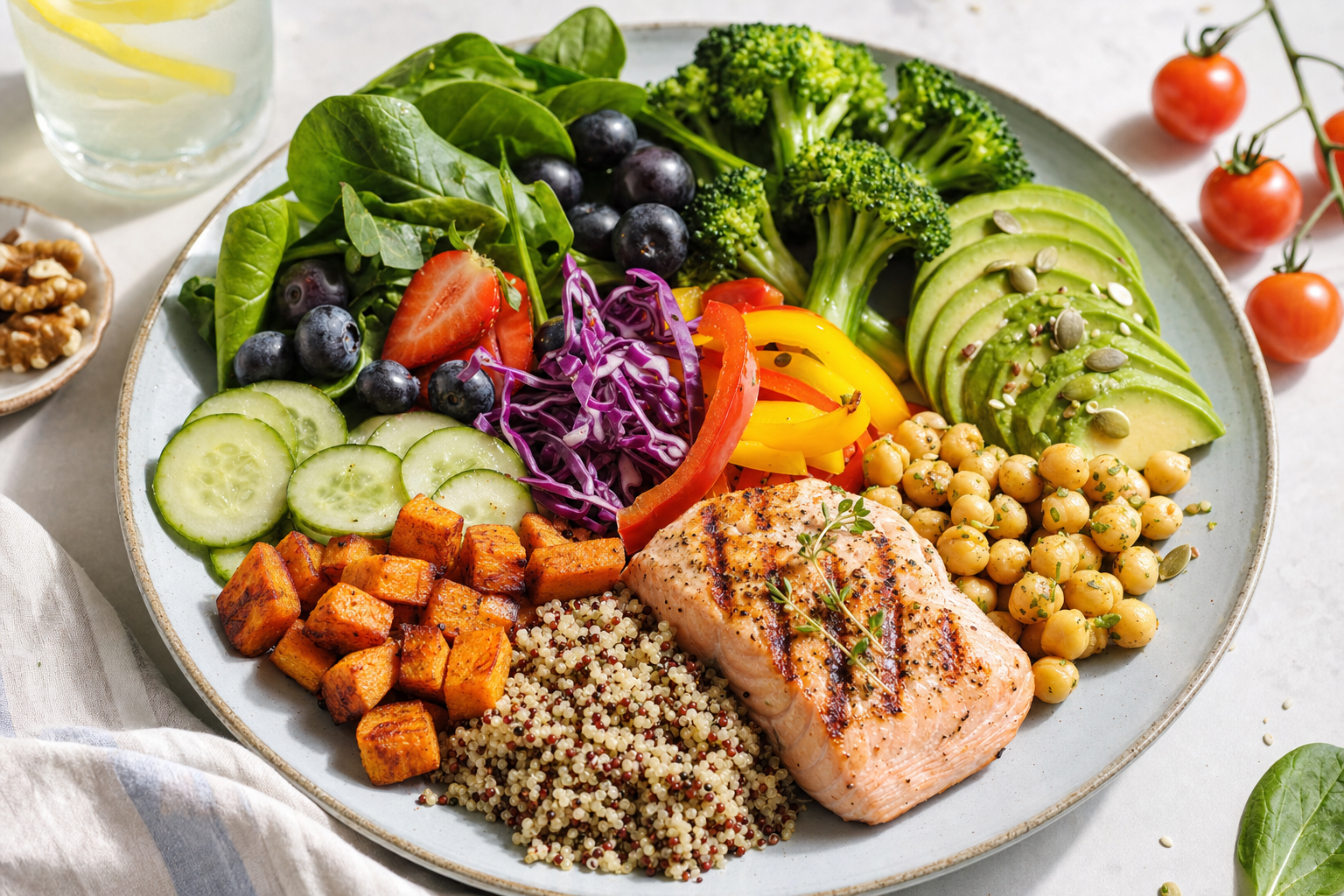
Why a plate-based approach works
If you want to eat for healthspan, one of the most useful tools is also one of the simplest, a well-built plate. Instead of tracking every gram or calorie, you use the composition of the meal to guide fullness, blood sugar response, and nutrient intake. This is especially helpful in real life, where work, family, social meals, and local food traditions do not always fit into a strict plan.
Research consistently shows that diet quality matters more than perfect precision. Patterns rich in vegetables, legumes, whole grains, fruits, nuts, seeds, fish, and minimally processed foods are associated with better cardiometabolic health and lower risk of many chronic diseases. A plate method helps translate that science into something practical and repeatable.
For many people, the hardest part of eating well is not knowing what is healthy, but making healthy choices consistently. A visual framework removes a lot of decision fatigue.
The basic structure of a longevity plate
A strong everyday plate can be built around four parts:
- Half the plate, non-starchy vegetables
- A quarter of the plate, protein
- A quarter of the plate, high-fibre carbohydrates
- A small amount of healthy fat
This is not a rigid rule, it is a starting point. The point is to create a meal that supports steady energy and satisfies appetite without excess refined starch or added fat.
1. Half your plate, vegetables
Vegetables are the foundation because they provide fibre, potassium, folate, vitamin C, polyphenols, and volume for relatively few calories. This helps with satiety and supports gut health and cardiometabolic health.
Aim for a mix of colours and textures. Think leafy greens, cabbage, carrots, pumpkin, tomatoes, beans, okra, eggplant, cucumber, and peppers. In Mauritius, there is no shortage of options that fit this pattern. The more varied the vegetable choices over the week, the better the nutrient coverage.
If you struggle to eat enough vegetables, start with adding one extra vegetable to meals you already enjoy. A simple salad, stir-fried greens, or extra vegetables in a curry can make a meaningful difference.
2. A quarter of your plate, protein
Protein helps preserve muscle mass, which becomes increasingly important with age. It also improves satiety and can help prevent overeating later in the day.
Good options include fish, eggs, chicken, yoghurt, tofu, tempeh, lentils, beans, chickpeas, and other pulses. For longevity, variety matters. Fish provides protein plus beneficial omega-3 fats, while legumes add fibre and support a healthier gut microbiome.
A useful check is whether your plate contains a clear protein source at most meals. This matters especially for breakfast and lunch, where many people rely too heavily on refined carbs.
The role of carbohydrates, and choosing the right ones
Carbohydrates are not the problem. The issue is usually the type and portion. High-fibre carbs digest more slowly, support better glycaemic control, and tend to be more filling.
Better choices include brown rice, oats, millet, sweet potato, lentils, beans, chickpeas, wholegrain bread, and intact grains where available. In a Mauritian context, traditional meals can be adapted rather than replaced. For example, rice can stay on the plate, but in a smaller portion, paired with more vegetables and protein.
Refined carbs, especially when eaten alone, are easier to overconsume and may lead to a quicker rise and fall in blood sugar. That does not mean they must be eliminated. It means they should be treated as occasional foods, not the base of every meal.
A practical rule is to ask, does this carb bring fibre, minerals, and fullness, or mostly starch with little else? That single question can improve food choices quickly.
Healthy fats, used with intention
Fats are essential, but they are very energy dense, so the portion matters. A longevity plate usually needs only a modest amount of fat, ideally from olive oil, avocado, nuts, seeds, or fatty fish.
These fats can improve flavour and help absorb fat-soluble vitamins from vegetables. But it is easy to overshoot when oils, fried foods, cheese, creamy sauces, and pastries are common in the same day.
A useful habit is to use fat to enhance a meal, not to dominate it. For example, a drizzle of olive oil, a spoonful of seeds, or a small handful of nuts often goes further than people expect.
How to build a plate in real life
The best meal pattern is one you can repeat in normal settings, at home, at work, or when eating out.
Here are a few examples:
- Lunch: grilled fish, a large vegetable salad, a small portion of brown rice, and a spoon of olive oil dressing
- Dinner: lentil curry, sautéed greens, pumpkin, and a modest portion of rice or roti made with more whole grains
- Breakfast: plain yoghurt with fruit and nuts, or eggs with tomatoes and sautéed vegetables, plus a slice of wholegrain toast
- Quick meal: canned beans, chopped vegetables, tuna, and avocado in a wrap or bowl
You do not need every meal to look perfect. Aim for consistency across the week. A few well-built meals each day add up.
Common mistakes that quietly undermine health goals
There are a few easy traps that make healthy eating harder than it needs to be.
Too little protein
Many people eat a carb-heavy breakfast or lunch and only realise they are hungry again an hour later. Adding a protein source can improve fullness and reduce snack-driven eating.
Not enough plants
If vegetables are treated as a side note, fibre intake tends to be too low. That can affect gut health, satiety, and long-term metabolic health.
Healthy food, oversized portions
Even nutrient-dense foods can lead to unwanted weight gain if portions are consistently large, especially when energy-dense fats and refined carbs are both present.
Treating perfection as the goal
A plate method is not about control for its own sake. It is about making a healthy default easier to achieve most of the time.
A simple way to start this week
Choose just one meal per day and rebuild it using the plate method. Do that for seven days.
You could start with lunch, since it is often easier to improve than dinner. Use this checklist:
- Half plate vegetables
- One quarter protein
- One quarter high-fibre carbs
- Small portion of healthy fat
If you want an even simpler rule, add vegetables first, then protein, then decide how much starch you really need. That order alone can improve meal quality.
The bigger picture
A longevity plate is valuable because it turns nutrition science into a routine. It helps you eat enough fibre, enough protein, and the right mix of foods without needing to count every bite.
Over time, that can support steadier energy, better appetite regulation, improved metabolic health, and better muscle maintenance with age. Most importantly, it makes healthy eating feel less like a project and more like a habit.
Start with one meal, one plate, one week. Then repeat it until it becomes the easy choice.
Good nutrition is one part of a longer, healthier life. Explore the wider Healthspan health ecosystem.